
Monday, October 26, 2026 | Today's Newsletter | Login
Canada Eyes Fix for International Student Pipeline
By Mata Press Service
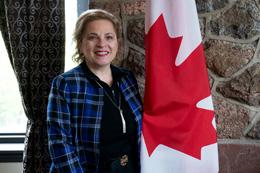
Canada’s new immigration minister says sweeping consultations this summer will help determine the future of the country’s international student system, as Ottawa looks to stabilize years of rapid, unsustainable growth that has put pressure on housing, institutions, and public trust.
“We need to balance our system with the numbers of people that are here…and certainly international students make up a large part of the temporary resident status,” said Immigration Minister Lena Metlege Diab in an interview with University Affairs.
“Canadians want to ensure that we have a system that is sustainable.”
Diab confirmed that universities, provinces, and students will be included in the upcoming talks, which will feed into Ottawa’s next three-year immigration levels plan. The consultations come amid a backdrop of student visa fraud, collapsing approval rates, and provincial crackdowns on what some ministers have called “bad actors” in the private college sector.
The policy reset follows a year in which Immigration, Refugees and Citizenship Canada (IRCC) approved just 45% of study permit applications, which is a sharp decline from the 62% approval rate in 2023.
According to a new survey by IDP and the Canadian Bureau for International Education (CBIE), 79% of study-abroad advisors said restoring confidence in Canada will depend on stable, transparent visa policies under Prime Minister Mark Carney’s government.
Canada’s international student population more than doubled over five years, soaring from about 567,000 to over a million by the end of 2023. That included a 200,000-student spike in just one year—the largest single-year increase in the program’s history, according to IRCC.
Minister Diab, appointed following the April 2025 election, said the unprecedented rise has added to Canada’s broader population surge, which grew by 1.1 million in 2023 alone, mostly due to temporary and permanent immigration. The country’s population now sits at roughly 41.7 million.
“We had no choice but to recalibrate and rebalance our system,” Diab said, referencing the immigration levels plan introduced in late 2024 that reduced both permanent and temporary resident intake.
In January 2024, the federal government capped study permit approvals for two years. The 2025 allocation was set at 437,000 permits, a 10% drop from the previous year’s target. Minister Diab also noted a new rule that bars students from changing schools without first securing a new permit and tightened the process for verifying admission letters after a wave of visa fraud in 2023.
In one case, nearly 2,000 applications were flagged for having fake acceptance letters within just weeks of launching a verification tool. The rule now requires Designated Learning Institutions (DLIs) to confirm admissions directly to IRCC and prove that students remain enrolled and active.
The fraud revelations triggered a broader clampdown on private colleges—especially those heavily reliant on international tuition. Some, as noted by the Asian Pacific Post, recruited students aggressively, charged inflated fees, then failed to deliver the promised education.
“We want students to feel protected and safe and that they’re not being taken advantage of,” said Diab.
The government also raised the financial requirement for new study permits. As of 2025, applicants must now show they have at least $20,635 in living expenses, which is double the old threshold, on top of tuition and travel costs.
That, combined with the cancellation of the Student Direct Stream (SDS) last November, has made Canada a tougher destination to access. The impact has been immediate. According to IRCC, permits issued to Indian students in Q1 2025 dropped 31% year-over-year, from 44,295 to 30,650.
“The new rules are making it harder for even the most qualified students to come here,” said one advisor quoted in the IDP-CBIE survey. “We’re seeing flawless applications being denied without a clear reason.”
Minister Diab said she understands the frustration but noted that systemic change was needed. “We’ve seen how important it is to restore integrity to the system…not just for Canadians, but for the students themselves.”
Universities and colleges are already feeling the impact. Data from University Affairs shows international students now make up more than 20% of total post-secondary enrolments. They pay, on average, five times more than domestic students, generating billions in annual revenue.
Yet those numbers come with caveats. As Diab pointed out, her home province of Nova Scotia has long depended on international students not just as tuition sources, but as future workers and residents.
“We really needed these students for many reasons,” she said, calling the province a “place of education” for both Canadians and foreign learners.
But while provinces hold jurisdiction over education funding, Minister Diab stopped short of promising federal aid to universities facing shortfalls.
Instead, she pointed to her role on the House of Commons Standing Committee on Science and Research, which has recommended reviewing how the Research Support Fund helps smaller schools offset indirect costs.
There’s also a growing perception challenge. “Canada is increasingly seen more as a pathway to immigration than a destination for education,” said Livia Castellanos, IDP Vice President of External Affairs, during a June 12 CBIE webinar.
“That’s a concern. We need to shift the message and refocus on our high-quality education system.”
Advisors polled by IDP say rebuilding trust will require more than caps and crackdowns. They’re calling for:
• Consistent, transparent visa policies
• Better student support from inquiry through graduation
• Stronger career services and post-grad employment data
• A coordinated, positive message about studying in Canada
Minister Diab said that’s exactly what the summer consultations are designed to produce.
“Canada is a welcoming country,” she said. “And we want students to have a good experience. That means listening, fixing what’s broken, and making sure international education remains something we can be proud of for the long term.”
Leave a comment