
Wednesday, October 21, 2026 | Today's Newsletter | Login
Bank of Canada Sounds Alarm Over Immigration Cuts
By Mata Press Service
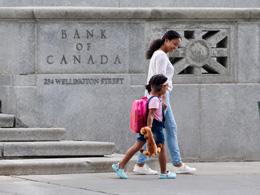
Canada's sharp immigration slowdown threatens to weaken economic growth, shrink the available workforce and intensify labour shortages as the country ages, the Bank of Canada has warned, just as Ottawa prepares to announce its next three-year immigration targets.
The warning puts fresh economic pressure on Prime Minister Mark Carney's government as it weighs whether to maintain sweeping immigration cuts or begin increasing admissions after two years of restrictions aimed at easing the country's housing and affordability crisis.
In a recent assessment, the central bank said the combination of fewer immigrants and an aging population is fundamentally changing Canada's economy, affecting employment, consumer spending, production and inflation.
The assessment comes as Carney and Immigration Minister Lena Metlege Diab signal a renewed emphasis on attracting skilled newcomers to support economic growth.
The government must table its 2027-2029 Immigration Levels Plan by November 1, setting targets for permanent residents, temporary foreign workers and international students.
The stakes are considerable.
Canada's population growth slowed to just 0.5 per cent in 2025, the weakest pace in more than a century, according to the Bank of Canada.
For decades, immigration helped Canada offset a declining birth rate and the retirement of older workers. That economic advantage is now coming under pressure as Ottawa restricts arrivals.
"In the coming years, fewer immigrants are expected to arrive, which will reduce demand for housing," the central bank said.
"This could lower pressure on housing costs. At the same time, less immigration will mean fewer workers and weaker demand for other goods and services. The economy won't grow as fast as a result."
The warning is especially significant because Canada's central bank, responsible for maintaining price stability, is identifying the economic costs of slower population growth while governments remain focused on reducing pressure on housing and public services.
The Bank's assessment follows unusually explicit comments from Carney suggesting Canada may soon begin raising immigration levels again.
In a September interview with The New York Times, the prime minister raised the prospect of a controlled return to population growth.
"Now the question starts to become, when do we resume some controlled increase in the population, which is the nature of Canada?" Carney said.
"So that will happen, and we just want to make sure that we've got it under control."
His comments marked a shift in tone after two years of restrictions introduced amid growing public frustration over housing shortages, soaring rents and pressure on health care and other services.
Metlege Diab has also emphasized the economic importance of skilled immigration as the government seeks to attract investment, expand industries and address labour shortages.
Speaking in Nova Scotia, while promoting federal business investment incentives, she described the government's objective as creating opportunities where skilled newcomers and Canadians could build their futures together.
Ottawa is targeting talent in health care, emerging technologies and skilled trades, while placing greater emphasis on economic immigrants already equipped to enter the workforce.
The Bank of Canada says demographic pressures have been building for decades.
Canada's birth rate fell below the level needed to replace the population more than 50 years ago.
Immigration helped compensate for that decline, keeping annual population growth near 1.2 per cent for much of the past five decades.
During the early 2020s, growth accelerated to as much as three per cent annually as Canada admitted record numbers of newcomers.
That expansion helped employers fill vacancies but also increased demand for housing and public services.
Ottawa responded in 2024 by cutting immigration targets and tightening rules for international students and temporary foreign workers.
The Bank now warns that continued declines in immigration will compound the effects of an aging population.
Canada's median age has risen from about 26 in 1971 to more than 40 today.
As more Canadians retire and fewer young workers replace them, businesses could struggle to maintain production.
Labour shortages could also push up wages in some industries, creating additional inflationary pressures.
Meanwhile, an aging population will require greater spending on health care, pharmaceuticals, home support and long-term care.
The central bank stresses that immigration policy remains the federal government's responsibility. Its concern is how demographic changes will affect economic growth and its ability to maintain inflation near two per cent.
The government's existing plan calls for 380,000 new permanent residents annually through 2028.
Temporary resident arrival targets are scheduled to decline from 385,000 in 2026 to 370,000 in 2027 and 2028, including 220,000 workers and 150,000 international students annually.
Carney has also pledged to reduce temporary residents to less than five per cent of Canada's population by the end of 2027, while keeping annual permanent resident admissions below one per cent of the population beyond that year.
Temporary residents currently account for approximately 6.7 per cent of Canada's population of nearly 42 million, according to figures cited in a Toronto Star analysis.
That leaves limited room for a significant increase without revising the government's commitments.
Immigration lawyers expect Ottawa to remain close to the existing permanent resident target of 380,000.
Meanwhile, the C.D. Howe Institute think tank has recommended holding admissions at that level in 2027 before reducing them to 350,000 in 2028 and 340,000 in 2029.
Leave a comment